Carol Crawley, LMFT Carol Crawley, LMFT

When CPTSD Gets Mistaken for Something Else — and Why It Matters

CPTSD doesn't just go unrecognized in law enforcement families — it gets misdiagnosed. His presentation can look like NPD. Hers can look like BPD. Both end up labeled as the problem. Neither gets the help they actually need. This post names what's happening — and includes a free Clinician Vetting Guide so you can find someone who knows the difference.
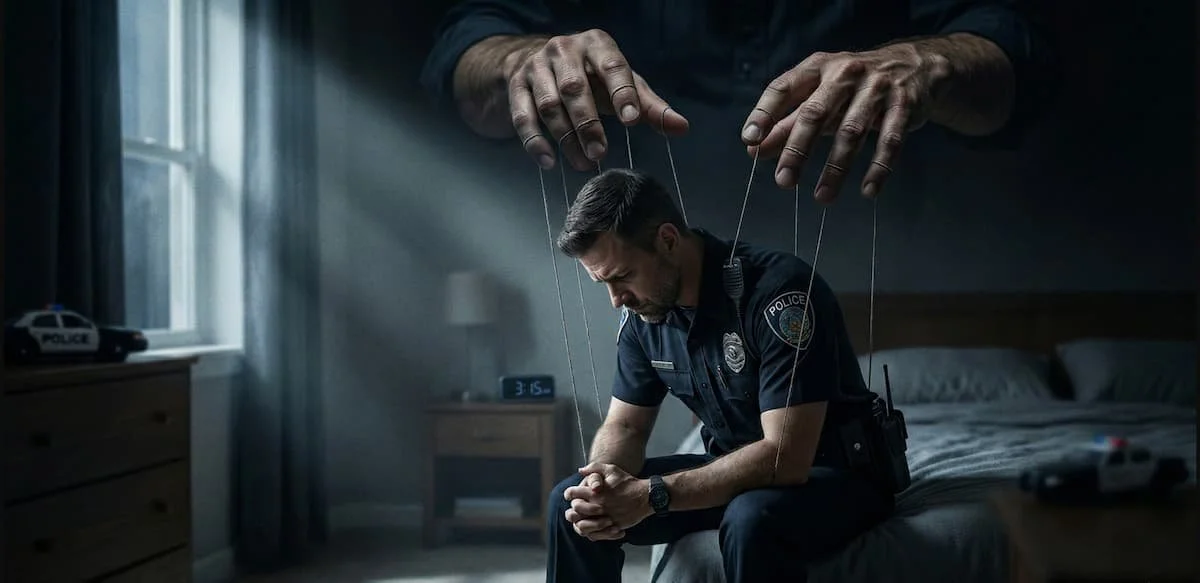
A word for the officer who's been called a narcissist. And the wife who's been told she's the problem.

If you've been reading this series, you already know that Complex PTSD in law enforcement families is insidious. It doesn't announce itself. It develops slowly, quietly, over years of chronic exposure to threat — and by the time anyone notices, it has already shaped the way both the officer and his wife move through the world.

But here's where it gets even more complicated.

CPTSD doesn't just go unrecognized. It gets misdiagnosed. And the labels it gets mistaken for can change the entire trajectory of a marriage, a career, and a life.

The Labels That Get Applied Instead

For the officer, CPTSD can be misread as Narcissistic Personality Disorder.

For the wife, CPTSD can be misread as Borderline Personality Disorder.

Both of them end up carrying a label that pathologizes their personhood rather than identifying a wound. Both of them are told, in essence, that they are the problem. And both of them may spend years — sometimes decades — in treatment that doesn't actually address what's happening in their nervous systems.

This matters enormously. Because NPD and BPD are personality disorders — meaning they describe enduring, deeply ingrained patterns of thinking, feeling, and relating. CPTSD is a trauma response — meaning it developed in response to specific conditions, and it can heal when those conditions are understood and treated appropriately.

The difference between those two frameworks changes the treatment trajectory and the sense of hope a couple carries. That is not an academic distinction. It is a life-altering one.

When His CPTSD Looks Like NPD

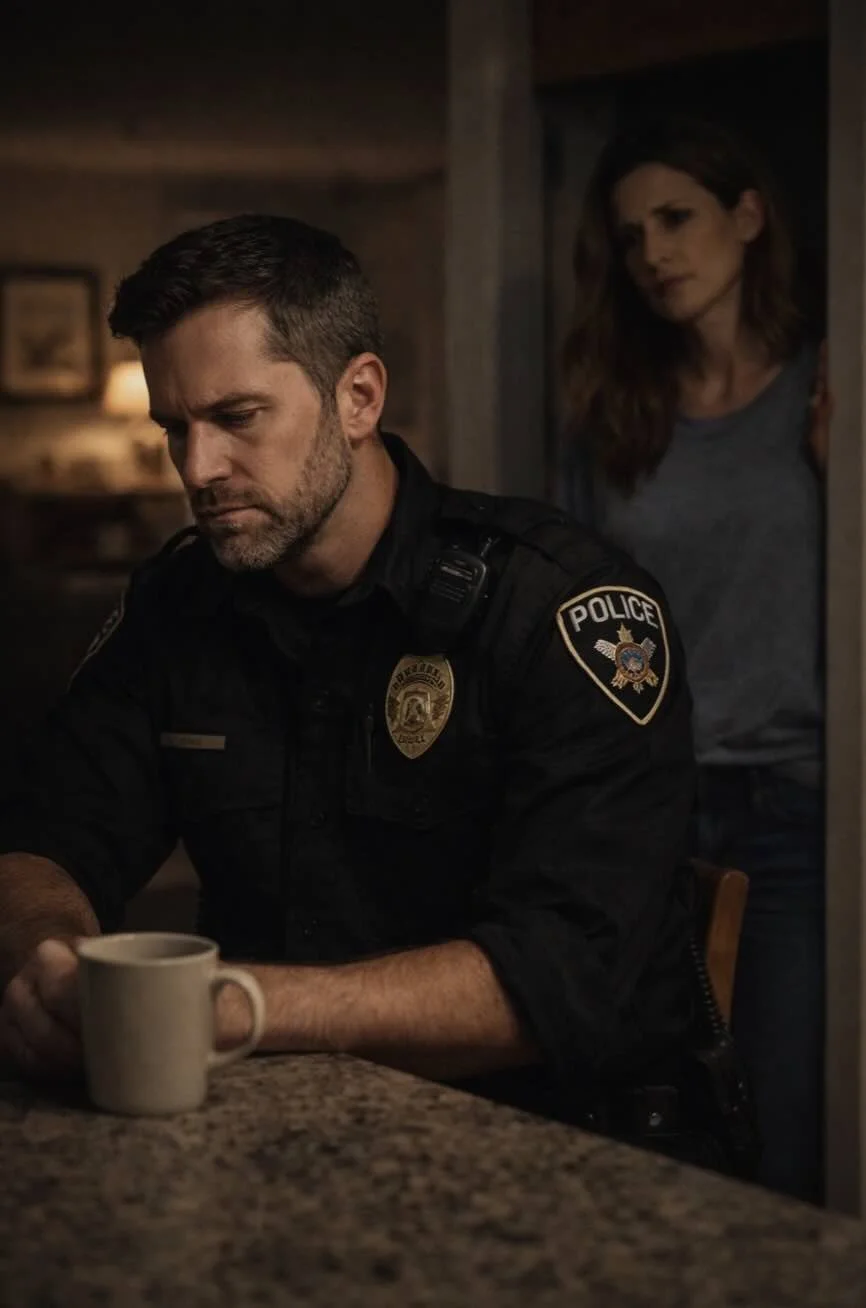
Narcissistic Personality Disorder is characterized by a lack of empathy, a grandiose sense of self, entitlement, and an inability to attune to the emotional needs of others. On the surface, a law enforcement officer with CPTSD can present almost identically.

The emotional unavailability that developed as a survival mechanism on the job looks like a lack of empathy. The hypervigilance and need for control looks like entitlement. The hero culture of law enforcement — where officers are reinforced for being strong, decisive, and above ordinary human vulnerability — can produce a presentation that looks strikingly like grandiosity. The inability to be emotionally present at home looks like a fundamental deficit in the capacity to connect.

In populations with chronic occupational trauma, these presentations can overlap significantly with personality disorder traits. Without specialized assessment — one that accounts for developmental history, cross-context patterns, and the specific demands of law enforcement culture — differentiation is genuinely complex. This is not a failure of the field. It is a gap in training that few clinicians have had the opportunity to fill.

And once an NPD label is applied, the prognosis shifts entirely. The officer may be quietly written off as untreatable. His wife may be counseled to leave. The marriage may be framed as inherently toxic rather than chronically stressed.

But what if it wasn't NPD? What if it was a nervous system that learned to protect itself so well that it forgot how to come home?

What if it wasn't a character flaw? What if it was a wound that never got named?

When Her CPTSD Looks Like BPD

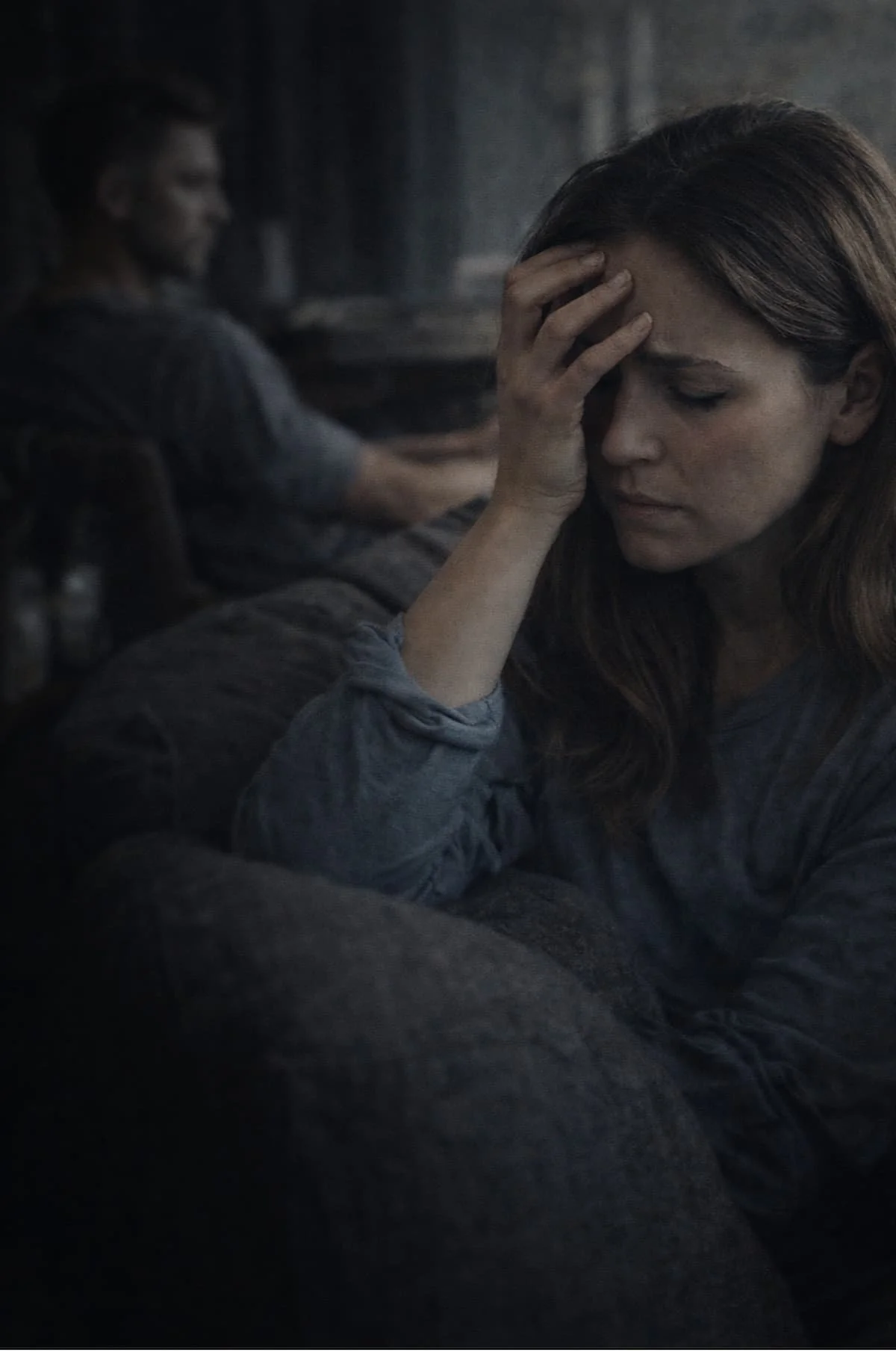
Borderline Personality Disorder is characterized by emotional dysregulation, fear of abandonment, intense and unstable relationships, and reactions that can seem disproportionate to the situation. A law enforcement wife living with years of chronic relational trauma can present almost identically.

Think about what her nervous system has been doing. While he is home, she is activated — scanning his face, reading his mood, managing the emotional climate of the entire household. When he leaves for shift, she crashes. Not with indifference — with exhaustion. The bracing releases. She can finally breathe, even though the house is empty and the worry sets in.

Her reactions — which look intense, destabilizing, out of proportion — are not random. They are the responses of a nervous system that has been living on high alert for so long that it no longer knows how to regulate without a threat present. She has experienced a slow, chronic form of relational loss as he withdrew further into the job. That is its own kind of abandonment — even when he never left.

Without a trauma-informed lens, presentations shaped by chronic relational stress can resemble BPD. And BPD carries enormous stigma — even within the mental health community. She may internalize that label completely. She may come to believe that her reactions are the problem, that her emotions are the disorder, that she is fundamentally too much, too unstable, too broken to be in a healthy relationship.

When in reality, her nervous system was doing exactly what it learned to do to survive the environment she was living in.

Her reactions weren't personality pathology. They were adaptations. And adaptations can change when the conditions change.

A Word of Clinical Honesty

I want to be careful here, because this is where the stakes get high.

Some people do have NPD. Some people do have BPD. These are real diagnoses that describe real experiences, and I am not suggesting that every difficult officer is secretly a trauma survivor or that every struggling wife has been misdiagnosed.

And this matters: trauma explains behavior. It does not excuse harm. Even when the root is a nervous system shaped by chronic occupational threat, responsibility for growth still belongs to the person. A trauma framework is not a release from accountability — it is a more accurate map for the work ahead.

What I am saying is this: in a first responder context, CPTSD must be thoroughly assessed before either of those diagnoses is applied. The question is not just what does this look like? The question is what has this person been living in, and for how long?

That distinction requires a clinician who knows this world — who understands first responder culture, chronic threat exposure, and the way both the officer and his wife are affected. Those clinicians exist. But they are not easy to find, because this is not taught in graduate school. It is learned by living it, working in it, or dedicating a career to understanding it from the inside.

How to Find a Clinician Who Knows the Difference

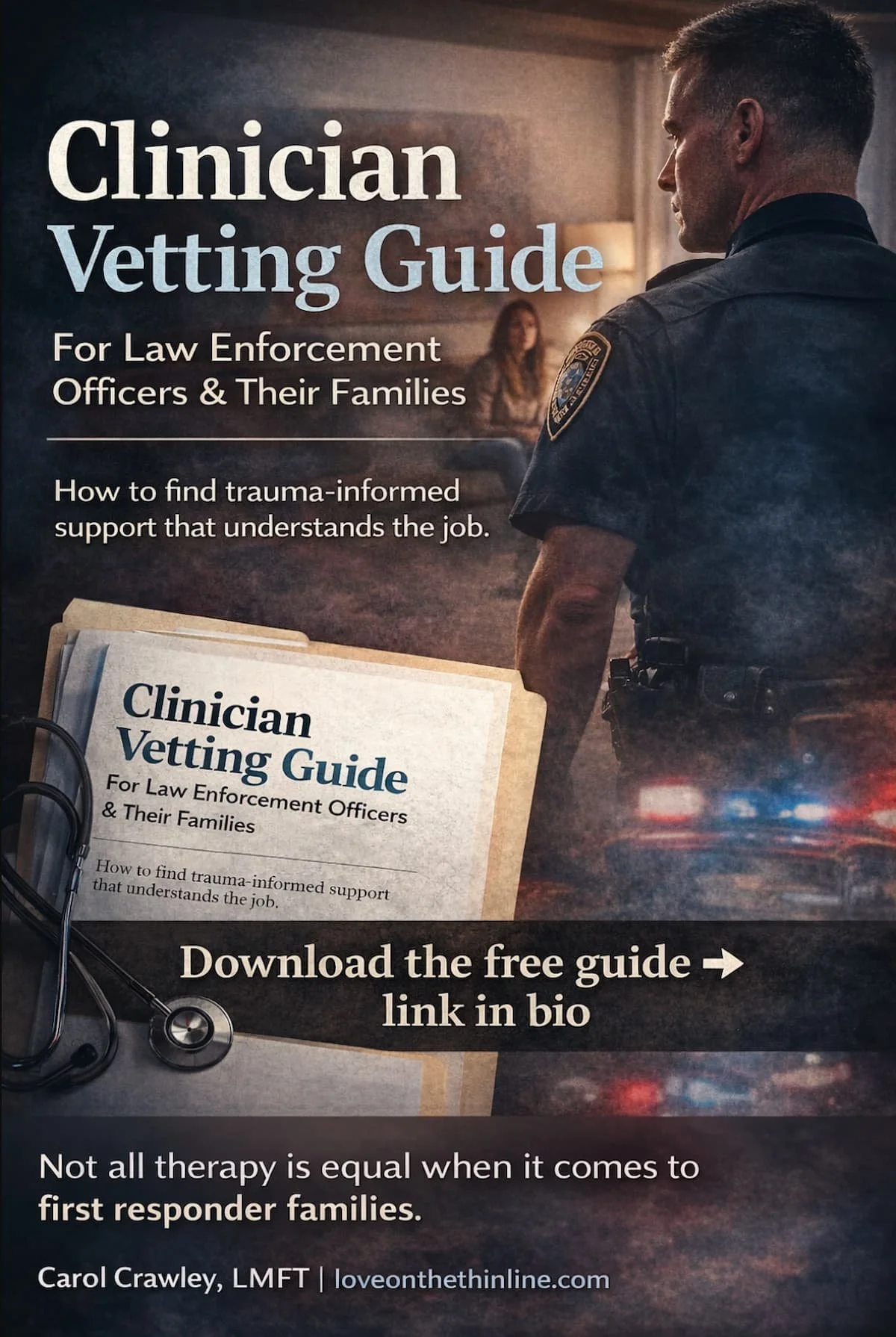
Because this gap is real and the stakes are high, I created a free resource specifically for law enforcement families: the Clinician Vetting Guide.

It includes five essential questions for a first phone consult, a complete question bank organized by category — trauma expertise, LEO-specific dynamics, confidentiality, misdiagnosis and accountability — and a clear red flag/green flag reference so you know what good and bad answers actually sound like in practice.

You should not have to walk into a therapy room and hope for the best. You deserve a clinician who can ask the right questions before applying a label that could follow you for years.

[Download the free Clinician Vetting Guide →]

What To Do If You've Already Been Given One of These Labels

If you or your spouse has been diagnosed with NPD or BPD — especially in the context of a law enforcement marriage — it is worth seeking a second opinion from a trauma-informed clinician who specializes in first responder families.

That is not the same as dismissing the diagnosis or avoiding accountability. It is asking the right question: is this who I am, or is this what I learned to do to survive?

Those are very different questions. And they lead to very different paths forward.

You deserve a clinician who knows the difference.

This Is Why the Work Matters

I didn't become a therapist who specializes in first responder families because graduate school prepared me for it. It didn't. I became this therapist because I lived this life — and then spent years researching, learning, and sitting with officers and their wives in rooms where these things finally got named.

The misdiagnosis problem is real. The gap in specialized training is real. The cost to these families is real.

And naming it — here, plainly, without clinical jargon — is part of what I believe I'm called to do.

If this series has resonated with you, share it with someone who needs it. The officer who thinks he's fine. The wife who thinks she's the problem. The clinician who has never worked with this population but wants to understand it better.

The next post in this series is coming. In the meantime, browse the blog — there's more here for you.

Carol is a Licensed Marriage and Family Therapist and the wife of a retired law enforcement officer. She specializes in supporting first responder families at the intersection of faith, trauma, and marriage.

Read More
Carol Crawley, LMFT Carol Crawley, LMFT

The Puppet Master: Why "Peace" Feels Dangerous for LEOs

He comes home and the house is calm. Nothing is wrong. And he can't relax. If your officer feels great at work and miserable at home — or if you're the wife watching him disappear by degrees — this is for you. What's happening has a name. And it's not your marriage.

Moving beyond PTSD to understand the insidious nature of Complex Trauma.

A word for the officer who doesn't recognize himself —

and the wife who doesn't recognize him either.

In the beginning, it was butterflies.

I remember when my husband would leave for shift and I'd feel that familiar mix of pride and quiet worry. That was normal. That was love.

But somewhere along the way, the butterflies became something else. Years into the job, I'd feel a pit in my stomach every time he ran late. I'd lie in bed and feel my chest tighten — not metaphorically, physically tighten. I went to the doctor. I blamed my diet. I thought I was headed for a heart attack.

It never occurred to me that what I was feeling was my nervous system responding to years of living under chronic, invisible threat.

It never occurred to me that what was happening to *him* had a name either.

We Know What PTSD Looks Like

We know the image. The veteran who flinches at loud noises. The flashback. The nightmare. The identifiable moment everything changed.

Post-Traumatic Stress Disorder has become part of our cultural vocabulary — and that's a good thing. Naming it has saved lives.

But there's another version. Quieter. Slower. More insidious. And it is absolutely running through the veins of law enforcement culture in ways we are only beginning to understand.

It's called Complex PTSD — and most officers, and most of their families, have never heard of it.

What CPTSD Actually Is

Complex PTSD doesn't come from a single incident. It develops from *prolonged, repeated exposure to threat* — exactly the conditions law enforcement officers live in, shift after shift, year after year.

The nervous system is designed to respond to danger and then return to baseline. But when danger is chronic — when the body never fully gets the signal that it's safe — something changes. The nervous system stops returning to baseline. It adapts. It rewires itself around the assumption that threat is always present.

And here's the insidious part: it doesn't look like a wound. It looks like personality.

The officer who can't sit still. Who needs the TV loud, the room busy, the energy high. Who seeks out unpredictable situations off duty because calm feels wrong — boring, suffocating, unsafe. Who is irritable at home but laser-focused on shift. Who is emotionally present for everyone on the job and emotionally unavailable to the people he loves most.

He doesn't think he has a problem. He thinks this is just who he is now.

And she — watching from the other side of the dinner table — thinks she's losing him. Or that she's the problem. Or that she just needs to be more patient, more understanding, more of whatever she isn't being.

Neither of them is right. And neither of them has the language for what's actually happening.

What It Looks Like From the Inside

For the officer, CPTSD can feel like:

Restlessness that never fully quiets. A pull toward adrenaline, risk, chaos — because the nervous system has learned that's what normal feels like. Emotional numbness with the people closest to him, even when he genuinely loves them. Hypervigilance that doesn't clock out — scanning rooms, sitting with his back to the wall, never fully exhaling. Irritability that seems to come from nowhere. Difficulty with intimacy — not physical necessarily, but emotional. The slow, quiet inability to let anyone fully in.

For the wife, it can feel like:

Watching someone she loves disappear by degrees. Asking "are you okay?" so many times that she stops asking. Overriding her own instincts because he tells her nothing is wrong and she can't prove otherwise. Carrying the emotional weight of the entire household while he is physically present but somewhere else entirely. Lying awake wondering what she did, what changed, whether this is just the job or whether she's lost him.

What she's experiencing has a name too: secondary traumatic stress. Her nervous system has been living in proximity to his for years. She has absorbed the chronic threat without ever wearing the badge.

"Feel Great at Work, Feel Miserable at Home — Must Be My Wife"

Here's the part nobody talks about — and the part that has quietly destroyed more law enforcement marriages than anyone wants to count.

They are both on an adrenaline roller coaster. But they are running in opposite directions.

For him: the job runs on adrenaline. High stakes, high focus, high intensity. His nervous system is activated, engaged, alive. And for an officer whose system has been rewired by chronic threat, that activation feels *good*. It feels like normal. It feels like himself. So he goes back. More shifts. More overtime. Because work is where he feels like himself again.

Then he comes home — and crashes. The adrenaline drops. The intensity drops. He feels flat, irritable, restless, empty. Like something is wrong.

He looks around at what's different. At work: purpose, adrenaline, people who get it. At home: the wife, the kids, the quiet demands of ordinary life.

His brain does the math. *I feel great at work. I feel miserable at home. Must be my wife.*

I've sat across from more officers than I can count who came in convinced their spouse was the source of their misery. And I would say to them, as plainly as I could: *"Feel great at work, feel miserable at home — must be my wife."*

And they would look at me and say: *"You just described me."*

For her: the roller coaster runs the other direction entirely.

While he's home, her nervous system is activated — scanning his face, reading his mood, managing the emotional climate of the house. When he finally leaves for shift, she crashes. Not with indifference — with exhaustion. The bracing releases. She can breathe again, even though the house is empty and the worry sets in.

They are in the same house, on the same roller coaster, moving in opposite directions. The moments that should bring them together — him arriving home, him leaving for shift — are the exact moments their nervous systems are out of phase. He's crashing when she's activating. She's finally regulating when he's gone.

There is no synchronized landing place. No moment where they're both settled at the same time.

And neither of them knows why.

That understanding alone — that the crash wasn't about her, it was about two nervous systems misfiring in opposite directions — brought more hope into those rooms than almost anything else I've offered. Because it meant the marriage wasn't the problem. The nervous systems were. And nervous systems can heal.

Over time — and depending on how long this has been the climate of the home — it is not uncommon for the wife to develop her own CPTSD. Not from the job. From living in prolonged proximity to his. Her nervous system learned to brace. Learned to scan. Learned to function under conditions that were never meant to be normal. She didn't wear the badge, but she carried the weight.

Two people in the same house. Both wounded. Both on a roller coaster they never signed up for. Neither with a name for what's happening.

Why It Goes Unrecognized

CPTSD is insidious precisely because it doesn't announce itself. There's no incident report. No clear before and after. It creeps in slowly, masquerading as toughness, as professionalism, as just the way things are in this life.

Law enforcement culture makes it worse. The same traits that make a good officer — compartmentalization, emotional control, hyperawareness, the ability to suppress fear — are the exact traits that make CPTSD invisible. The coping mechanisms *work*, until they don't. Until they start costing connection. Until the man who protected everyone else can't find his way back to the people who need him most.

And she — trained by years of his silence to doubt her own perception — has often stopped trusting what her body has been trying to tell her all along.

There Is a Way Through

I want to be careful here, because hope without honesty isn't hope — it's just comfort. So let me say this plainly: CPTSD is real, it is serious, and it requires real support. Not willpower. Not just trying harder. Actual, informed, trauma-competent care.

But it is also treatable. The nervous system that learned to live in chronic threat can learn something different. Not quickly, and not without help. But it can.

One of the most practical things an officer can do — and one of the simplest — is learn to share the map, not the blood.

You don't have to tell your wife the graphic details of the shift to let her in. You don't have to relive the worst calls to prove you're struggling. What she needs — what both of you need — is an internal location. *"I'm wired tonight, give me twenty minutes."* *"I'm shutdown, I'm not trying to shut you out."* *"I'm running on empty, I need quiet before I can be present."*

That's not weakness. That's a nervous system learning to communicate instead of isolate. And it gives her something to work with instead of leaving her to read the room alone.

And to the wife reading this: being a refuge does not mean absorbing everything.

You can be compassionate and have limits. You can love him faithfully and insist on support for yourself. You can hold space for his healing and still say *"I need something too."* The women who survive this life well are not the ones who quietly disappear into his wounds. They are the ones who stay present, stay grounded, and refuse to lose themselves in the process.

Being his refuge is not the same as carrying him alone.

*"He restores my soul."* — Psalm 23:3

That word *restores* has always stopped me. Not creates. Not repairs. Restores — as in, what was there before can be recovered. The officer who doesn't recognize himself. The wife who doesn't recognize him either. The marriage that has been slowly hollowed out by something neither of them could name.

Restoration requires naming what's actually happening first.

This post is a beginning of that.

There's More to This Story

Here's where it gets even more complicated — because CPTSD doesn't just go unrecognized in law enforcement families. It gets *misdiagnosed*. And the labels it gets mistaken for can change everything.

His presentation can look like Narcissistic Personality Disorder. Hers can look like Borderline Personality Disorder. Both of them end up labeled as the problem. Neither gets the help they actually need.

That's the next conversation. And it's one worth having.

*Continue reading: When CPTSD Gets Mistaken for Something Else — and Why It Matters →*

*Carol is a Licensed Marriage and Family Therapist and the wife of a retired law enforcement officer. She specializes in supporting first responder families at the intersection of faith, trauma, and marriage.*

Read More
Carol Crawley, LMFT Carol Crawley, LMFT

Nobody Told Me It Would Feel Like This

Nobody told me it would be quiet. I expected the fear — the late nights, the unanswered calls. What I hadn't braced for was the slow fade. If you can't quite name what's wrong, you're not imagining it. This is for you.

A word for the woman who can't quite name what's wrong.

Nobody told me it would be quiet.

I expected the fear — the held breath when he's late, the unanswered calls, the minutes that stretch into something unbearable. That part, I had braced for.

What I hadn't braced for was the slow fade.

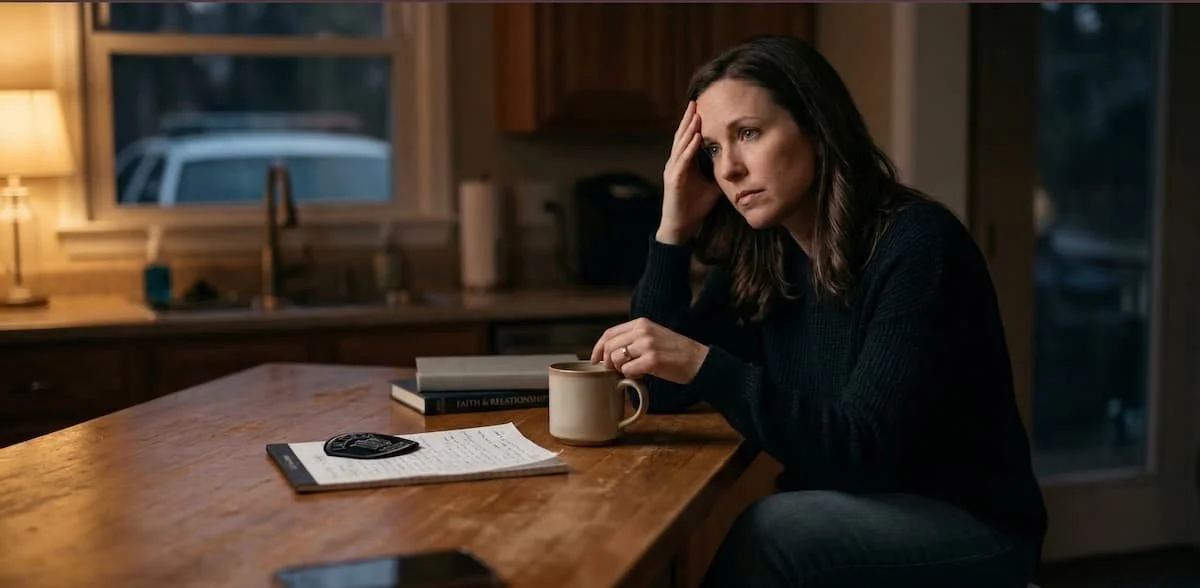
The way he'd come home and be present in the house but somehow unreachable. The way conversations would stop going very deep. The way I'd reach for him and find — not conflict, not anger, just distance. A version of him I didn't fully recognize, wearing the face of the man I married.

So I'd ask. Are you okay? Is something wrong?

And he'd say he was fine.

And I would almost believe him.

When Your Body Knows Before Your Mind Does

Here's what nobody talks about: what happens to you over time when the person you love keeps telling you nothing is wrong — and something in you keeps knowing that isn't true.

At first, you trust yourself. You notice. You ask. You bring it up gently, then directly, then carefully, then not at all.

And slowly, without realizing it, you begin to override what your own body is telling you. You learn to dismiss the tightness in your chest. You explain away the sleeplessness. You tell yourself you're too sensitive, too needy, too much. You stop bringing it up because the gap between what he says and what you feel becomes too confusing to name out loud.

This is called self-gaslighting — and it is one of the most common and least-talked-about experiences of the law enforcement wife.

It doesn't mean you're weak. It means you've lived in chronic uncertainty long enough that your nervous system adapted. You learned to function under conditions that were never meant to be normal. And you did it so quietly, so competently, that no one — maybe not even you — ever stopped to ask how you were actually doing.

Your body has been keeping score — even when your mind tried to override it.

What You're Carrying Has a Name

There is a particular kind of weariness that belongs to the law enforcement wife. It doesn't show up on an x-ray. You can't explain it at a dinner party. It lives in the gap between who he was and who he's becoming. In the hypervigilance that follows you everywhere — not just when he's on shift, but into your sleep, your parenting, your sense of self.

You love him. That has never been the question.

You can love a good man and still be deeply wounded by the distance he maintains to survive his job.

What you're carrying is real. It has a name: secondary trauma. Chronic hypervigilance. Grief without a funeral.

He Leads Me Beside Still Waters

I've spent a long time with Psalm 23. As a therapist, as a woman of faith, and as someone who walked through a very difficult season in her own marriage to a man who wore the badge for decades — that psalm has met me in places I couldn't articulate to anyone else.

"He leads me beside still waters. He restores my soul."

Still waters aren't the absence of hard things. They're a place of restoration. A place where the soul — your soul, not just his — is tended.

That's what I believe God offers the law enforcement wife. Not a promise that nothing will go wrong. But a promise that you are not forgotten in the middle of it. That the quiet erosion has not gone unseen. That the woman who held everything together while quietly falling apart is known — and worth restoring.

You are not just a support system. You are not just a coping mechanism in his life. You are a woman with a soul worth restoring.

What I Wish Someone Had Offered Me

I became a licensed therapist. I sat through years of graduate training. And I can tell you honestly: none of it prepared me for what I was living at home.

They don't teach first responder culture in school. They don't teach what happens to the wife. I learned what I know the hard way — researching on my own, trying to find language for something I could feel but couldn't name, piecing together what was happening to my husband and to me from sources that weren't written for people like us.

That's not a gap in my education. That's the whole point. There are very few therapists who understand this world — not because they aren't skilled, but because you can't learn this in a classroom. You learn it by living it.

Some law enforcement wives have a built-in community — cop friends, shared dinners, women who understand the life because they're living it too. That was not my world. My husband kept his work life and home life completely separate. There was no tribe on either side. I felt like I was on a deserted island, fluent in a language no one around me spoke.

Maybe you had that community and still felt alone inside it. Maybe, like me, you never had it at all.

Either way — what I needed most was a room full of women who got it. Women who didn't need a two-minute explanation before I could say the real thing.

That room didn't exist. So I built one.

The Watch & The Well is a 12-week online formation program designed specifically for law enforcement wives. Not therapy. Not a vent-and-go-home circle — structured, guided, and designed to create real change.

Each week includes a live session, a guided workbook, practical tools for your nervous system, and honest conversation with women who understand the job. You'll learn to trust what your body has been trying to tell you, set clear limits without guilt, and find your footing again — as a wife, and as yourself. Your faith and your reality are both welcome here.

Naming what is true doesn't make you disloyal. It makes you honest.

You Were Made for More Than Enduring

If you've been white-knuckling your way through police wife life — overriding your instincts, holding the household together, wondering if you're imagining things, and waiting for someone to finally ask how you're doing — I want you to know:

This program was built for you.

Not for the woman who has it all together. For the woman who is honest enough to admit she doesn't, and brave enough to do something about it.

The next cohort is forming now. If you're curious whether it's the right fit, start here: [Learn more about The Watch & The Well →]

Carol is a Licensed Marriage and Family Therapist and the wife of a retired law enforcement officer. She supports first responder wives at the intersection of faith, trauma, and marriage.


Read More